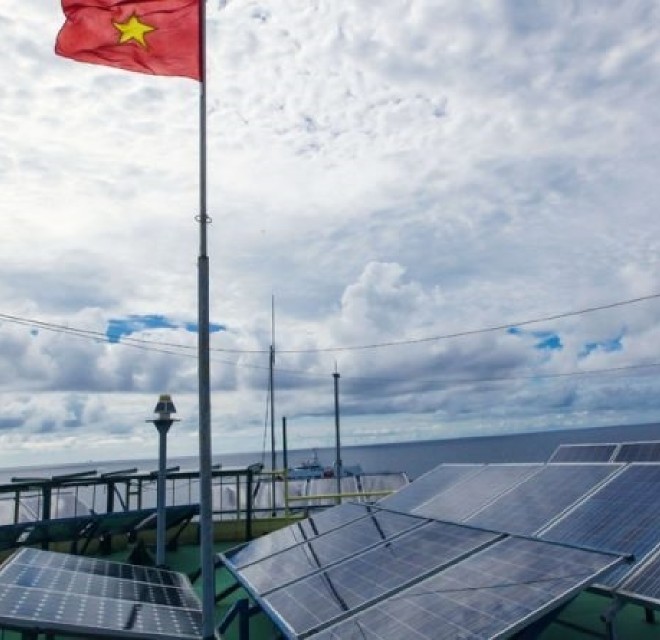
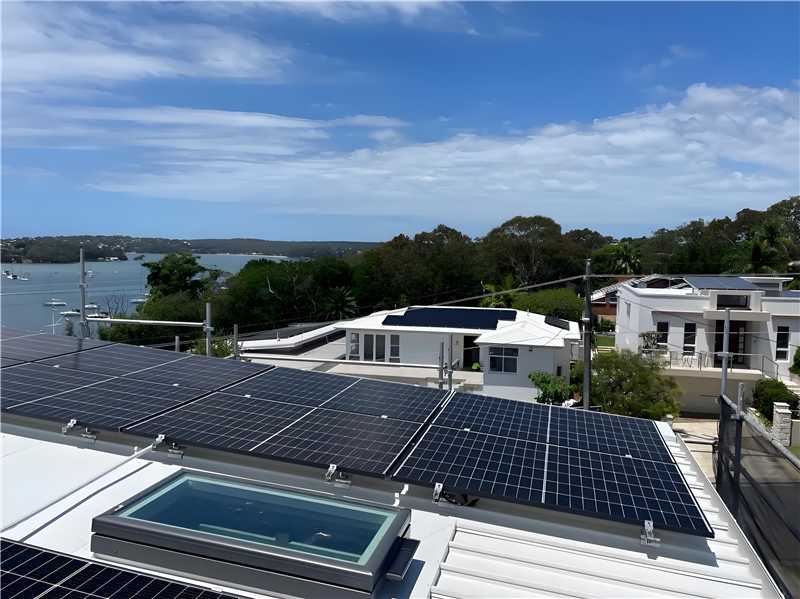
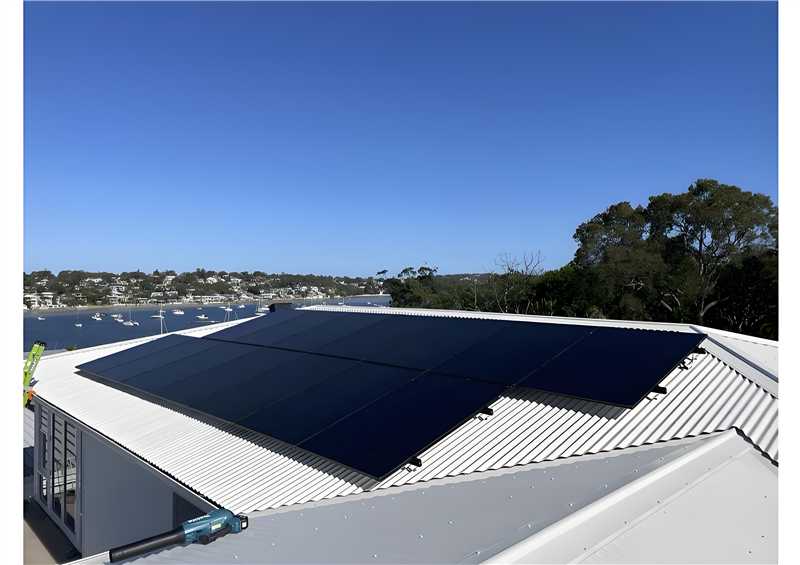
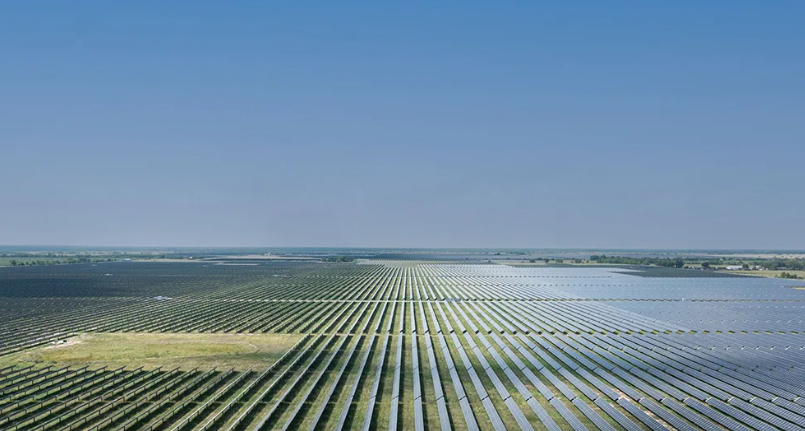
According to foreign media reports, the Vietnamese government recently said that the target of photovoltaic installed capacity planned to be deployed from 2031 to 2045 is too high and should be appropriately reduced in order to make more market space for wind power generation.
In a communique released by the Vietnamese government office a few days ago, Vietnamese Deputy Prime Minister Li Wenqing said that the installed capacity of photovoltaic system set in the country's "2021-2030 power development master plan VIII" is too high.
Vietnam's Ministry of industry and trade announced on February 21 that from now to 2030, Vietnam plans to deploy 146gw of installed capacity of photovoltaic systems, a decrease of 9gw compared with the plan announced in November last year. By 2045, the planned installed capacity of photovoltaic system will reach 352gw. Vietnam's Ministry of industry and Trade said that from 2031 to 2045, photovoltaic power generation will account for 25% of Vietnam's total power generation.
Vice Premier Li Wenqing commented that Vietnam should reduce the proportion of installed capacity of photovoltaic system and increase the proportion of offshore wind power.
According to the data of Vietnam electric power company (evn), as of 2021, Vietnam is one of the 10 countries with the highest photovoltaic deployment in the world, with a total installed capacity of 16504mw, accounting for 2.3% of the world.
Vietnam's Ministry of industry and trade submitted the first draft of the "master plan for power development VIII" to the government in March last year. Since then, the plan has been revised four times.
In addition, the Ministry of industry and trade of Vietnam requested to postpone the implementation of the plan to the second quarter of this year.
Vietnam Adjusts Energy Strategy: Cuts Solar Target, Expands Offshore Wind Power
Hanoi, November 5, 2025 – Vietnam has revised its renewable energy roadmap, scaling back its photovoltaic (PV) installation target while accelerating offshore wind power development. The shift, announced by the Ministry of Industry and Trade, reflects a strategic realignment to address grid constraints, land scarcity, and economic challenges in the solar sector. The decision marks a pivotal moment for Vietnam’s energy transition, as the country seeks to balance domestic demand with international climate commitments.
Revised Solar Target: A Strategic Retreat
Under the updated plan, Vietnam’s 2025 solar capacity target has been reduced from 20 gigawatts (GW) to 15 GW, with rooftop PV installations accounting for 40% of the total. The adjustment follows years of rapid growth that strained the national grid, leading to curtailment issues and financial losses for developers.
The policy pivot is rooted in practical challenges. Vietnam’s industrial boom, particularly in provinces like Bac Ninh, has driven annual electricity demand growth exceeding 13%, but land availability for large-scale solar farms has become scarce. Additionally, the government’s 2025 decision to slash feed-in tariffs for solar projects by 34%—from 7.09–9.35 cents per kWh to 4.69–6.48 cents—discouraged further investment. The move sparked backlash from foreign investors, including Japan’s Fuji Electric and Thailand’s B.Grimm, who termed the tariff cuts “unilateral and damaging.”
Domestic market dynamics also played a role. Vietnam’s solar industry, once reliant on Chinese imports, now faces stagnant exports due to trade barriers. In 2025, Chinese PV shipments to Vietnam dropped by 48%, while domestic manufacturers struggled to compete with global giants like Jinko Solar and Longi.
Offshore Wind: The New Frontier
In contrast, offshore wind power is emerging as Vietnam’s priority. The government aims to install 1.3 GW of offshore capacity by 2025 and 6 GW by 2030, with a focus on coastal regions like Bac Lieu and Ca Mau. The expansion is driven by abundant wind resources and fewer land-use conflicts.
Key initiatives include:
Streamlined permitting: The Ministry of Natural Resources and Environment has cut approval timelines for offshore wind projects from 18 months to 12 months.
Public-private partnerships: Vietnam plans to open bidding for 3 GW of offshore capacity in 2026, with international firms like Denmark’s Ørsted and China’s Mingyang Energy expressing interest.
Grid upgrades: The state-owned Vietnam Electricity (EVN) is investing $2 billion to build transmission lines from offshore wind hubs to industrial centers.
Policy Push and Economic Implications
The energy shift aligns with Vietnam’s broader goal of reducing coal dependence. Coal currently accounts for 45% of electricity generation, but the government aims to cut this to 30% by 2030. Offshore wind, with its higher capacity factor (40–50% vs. solar’s 15–20%), offers a more reliable alternative.
However, challenges remain. Offshore wind projects require upfront investments of $3–4 million per MW, compared to $1.2 million for solar. To attract capital, Vietnam has introduced tax incentives, including a 10-year corporate income tax exemption for wind developers.
The policy changes also carry geopolitical significance. Vietnam’s pivot from solar to wind could reshape its energy trade partnerships. While Chinese firms dominate solar supply chains, European companies like Siemens Gamesa and Vestas are leading offshore wind technology transfers. This diversification may reduce Vietnam’s reliance on any single market.
Global Context and Future Outlook
Vietnam’s strategy mirrors broader trends in Southeast Asia. Countries like Indonesia and Thailand are also prioritizing offshore wind, citing grid stability and land constraints. For Vietnam, the transition is urgent: its electricity demand is projected to reach 727 billion kWh by 2025, with industrial sectors consuming 70% of the total.
Looking ahead, the success of offshore wind will hinge on infrastructure development and investor confidence. If Vietnam meets its 6 GW target by 2030, it could become a regional leader in renewable energy, positioning itself as a hub for green technology exports.
For now, the energy sector’s focus is on execution. As Nguyen Van Dung, deputy director of EVN, stated: “Offshore wind is not just an option—it’s a necessity for Vietnam’s sustainable future.”