
 EN
EN
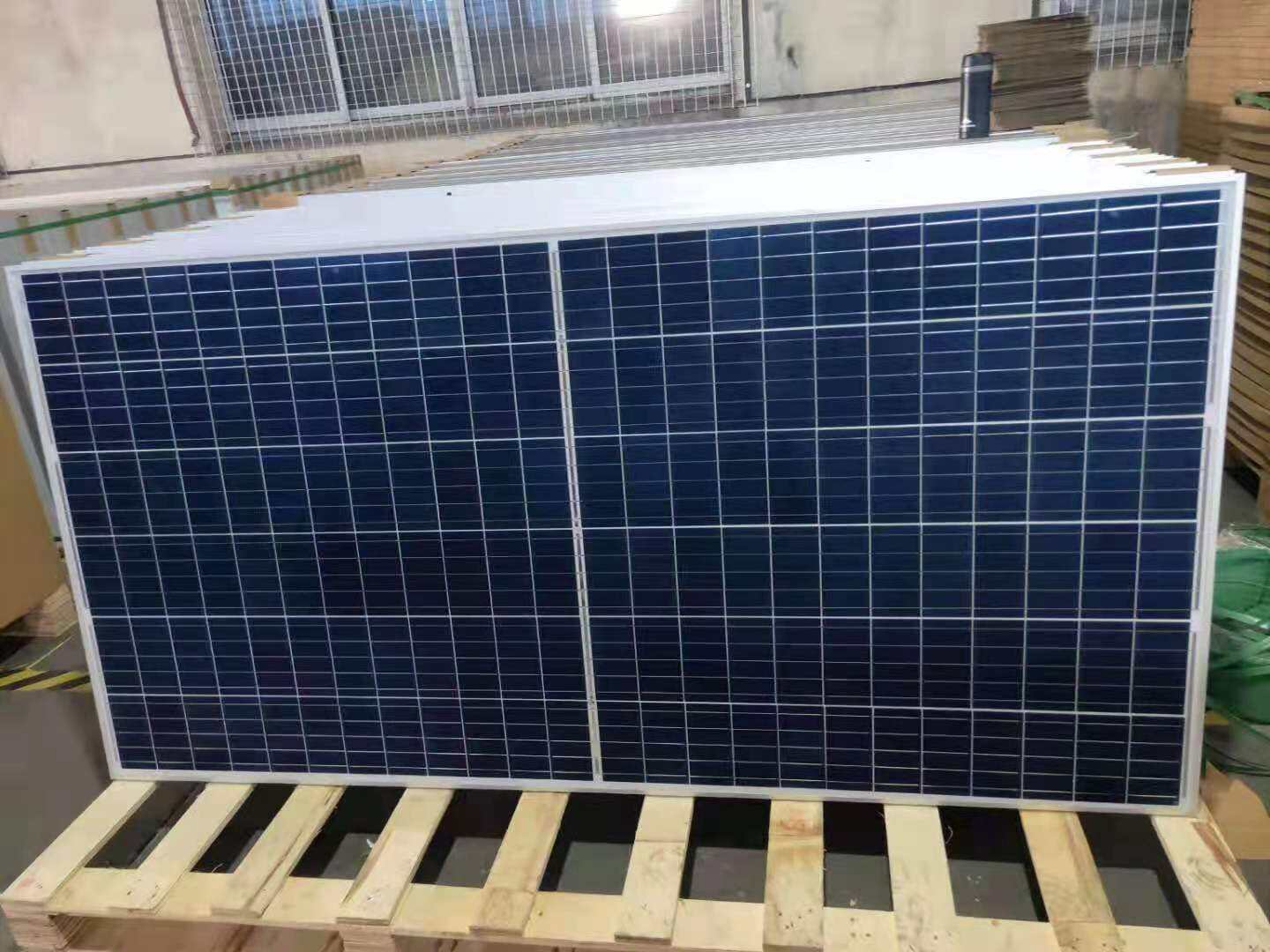
When investing in renewable energy infrastructure, the selection of global solar panels extends far beyond initial cost considerations and rated power output specifications. Among the most overlooked yet fundamentally important factors is the performance warranty—a contractual promise that defines the long-term value proposition of your solar investment. Performance warranties establish the minimum power output levels that manufacturers guarantee their panels will maintain over decades of operation, directly impacting your project's energy yield, financial returns, and operational predictability. Unlike product warranties that cover manufacturing defects, performance warranties address the inevitable degradation that all photovoltaic modules experience through environmental exposure, making them the cornerstone of risk mitigation in large-scale solar deployments.

The critical nature of performance warranties becomes particularly evident when evaluating global solar panels across different manufacturers and regional markets. These guarantees serve as the primary mechanism for transferring long-term performance risk from the buyer to the manufacturer, establishing accountability structures that protect stakeholders throughout the system's operational lifespan. In markets where solar installations represent multi-million dollar capital expenditures with 25 to 30-year revenue models, the strength and enforceability of performance warranties directly influence project financing terms, insurance premiums, and investor confidence. Understanding why these warranties matter enables procurement teams to make informed decisions that balance upfront costs against lifetime value creation.
The Financial Protection Framework Behind Solar Panel Performance Warranties
Quantifying Long-Term Investment Risk Through Warranty Structures
Performance warranties for global solar panels create measurable financial protection by establishing contractual obligations around power output degradation over time. Standard warranty structures typically guarantee that panels will maintain at least 90% of their rated power output after 10 years and approximately 80% to 85% after 25 years. These thresholds directly translate to revenue certainty in power purchase agreements and feed-in tariff arrangements. When a manufacturer backs their global solar panels with robust performance guarantees, they essentially underwrite the financial model that project developers present to lenders and equity investors. This underwriting function reduces perceived investment risk, often resulting in more favorable financing terms, lower interest rates, and improved debt-to-equity ratios.
The economic impact of performance warranties extends throughout the solar value chain. For utility-scale developers procuring global solar panels, warranty terms influence levelized cost of energy calculations by providing confidence in long-term generation profiles. A panel with a conservative warranty but superior actual performance history may prove less valuable than one with aggressive warranty commitments backed by manufacturer financial stability. The warranty effectively functions as an insurance policy where the premium is embedded in the module price, and the coverage protects against revenue shortfalls caused by excessive degradation. Sophisticated buyers analyze warranty structures alongside manufacturer balance sheets to assess the likelihood of successful claim resolution decades into the future.
Protecting Against Premature Degradation and Energy Yield Loss
The primary function of performance warranties on global solar panels is safeguarding against accelerated degradation that would compromise energy production below expected levels. Solar modules naturally experience efficiency decline through various mechanisms including potential-induced degradation, light-induced degradation, and environmental stress factors such as thermal cycling and humidity exposure. Without contractual performance guarantees, asset owners bear the full financial burden of underperforming arrays. Strong warranties shift this burden back to manufacturers, incentivizing them to implement rigorous quality control during production and select materials with proven long-term stability characteristics.
When evaluating global solar panels across different manufacturers, warranty terms reveal significant variations in manufacturer confidence regarding their product longevity. Premium manufacturers offering 30-year performance warranties at higher guaranteed output levels signal their commitment to module quality and willingness to stand behind their products. These extended warranties particularly matter for projects with long-term power purchase agreements or installations in challenging environmental conditions where accelerated degradation risks are elevated. The warranty becomes a critical selection criterion because it transforms uncertain future performance into a contractual obligation with remedies including panel replacement, financial compensation, or output guarantees that maintain the project's economic viability.
Technical Credibility and Manufacturing Quality Indicators
How Warranty Terms Reflect Production Standards and Material Selection
Performance warranty structures for global solar panels serve as transparent indicators of manufacturing quality and production confidence. Manufacturers with advanced production facilities, rigorous testing protocols, and vertically integrated supply chains can offer more aggressive warranty terms because they maintain tighter control over material quality and production consistency. When assessing global solar panels, warranty analysis reveals insights into the manufacturer's technical capabilities that may not be apparent from datasheets alone. Companies investing heavily in research and development, accelerated lifecycle testing, and quality assurance systems demonstrate their commitment through warranty terms that extend beyond industry norms.
The correlation between warranty strength and technical credibility becomes particularly important when procuring global solar panels for projects in extreme climates or challenging installation environments. Manufacturers offering comprehensive performance guarantees for installations in high-temperature, high-humidity, or high-salinity regions signal their confidence in module resilience under stress conditions. These warranties often incorporate specific testing certifications such as IEC 61701 for salt mist corrosion resistance or IEC 62804 for potential-induced degradation resistance. Buyers can leverage warranty terms as a screening mechanism to identify manufacturers who have validated their products against relevant environmental stressors rather than relying solely on marketing claims or standard certifications that may not address project-specific conditions.
Warranty Enforceability and Manufacturer Financial Stability
A performance warranty on global solar panels holds value only to the extent it can be enforced when needed, making manufacturer financial stability as important as the warranty terms themselves. The solar industry has witnessed numerous manufacturer bankruptcies and market exits that rendered previously issued warranties worthless, leaving asset owners without recourse for underperforming systems. When selecting global solar panels, sophisticated buyers conduct financial due diligence on manufacturers, examining balance sheet strength, revenue trends, profitability, and market positioning. Warranties from well-capitalized, financially stable manufacturers with established global presence carry significantly more value than identical terms from undercapitalized or financially distressed companies.
The enforceability challenge extends beyond manufacturer survival to include practical considerations around claim processing, testing requirements, and remedy fulfillment. Strong performance warranties specify clear procedures for performance verification, independent testing protocols, and defined remedies with specific timelines. When evaluating global solar panels, buyers should assess not only warranty duration and guaranteed performance levels but also the practical mechanics of claim resolution. Warranties that require extensive documentation, impose unreasonable testing burdens on claimants, or limit remedies to repair rather than replacement may offer less protection than their terms suggest. The most credible warranties include provisions for third-party testing, clear performance measurement methodologies, and comprehensive remedy options that genuinely compensate for energy production shortfalls.
Risk Mitigation Across Project Lifecycle Phases
De-Risking Project Financing and Investment Decisions
Performance warranties on global solar panels play a pivotal role in securing project financing by reducing lender and investor uncertainty about long-term cash flow generation. Financial institutions underwriting solar projects analyze power production forecasts with particular attention to degradation assumptions that impact revenue projections over 20 to 30-year loan terms. Strong manufacturer warranties provide additional security that actual performance will meet or exceed financial model assumptions, directly influencing bankability assessments. Projects utilizing global solar panels with robust, verifiable performance guarantees from creditworthy manufacturers typically achieve more favorable financing terms including lower interest rates, higher loan-to-value ratios, and reduced reserve requirements.
The risk mitigation value extends to insurance considerations and operational risk management. Insurers providing performance guarantee insurance or revenue protection policies evaluate the underlying equipment warranties when pricing coverage and establishing terms. Global solar panels backed by comprehensive performance warranties may qualify for reduced insurance premiums because the manufacturer warranty provides a primary layer of protection against degradation-related revenue shortfalls. This layered risk management approach—combining manufacturer warranties with insurance products and performance monitoring systems—creates comprehensive protection that addresses multiple failure scenarios. Procurement teams evaluating global solar panels should quantify the total risk management value of warranties rather than viewing them as isolated product features.
Operational Confidence and Maintenance Planning Benefits
Beyond financial protection, performance warranties on global solar panels provide operational benefits by establishing baseline performance expectations that inform maintenance strategies and system monitoring protocols. Operations teams use warranty-guaranteed output levels as benchmarks for performance monitoring systems, enabling early identification of underperforming arrays that may qualify for warranty claims. This proactive approach to performance management maximizes energy yield by ensuring timely identification and remediation of degradation issues before they significantly impact revenue generation. Global solar panels with clear, measurable warranty terms facilitate more effective operations and maintenance planning compared to products with vague or difficult-to-verify performance commitments.
The warranty framework also influences long-term asset management decisions including system expansion timing, technology upgrade considerations, and eventual repowering strategies. Projects using global solar panels with remaining warranty coverage maintain higher asset values during refinancing or sale transactions because the warranties transfer risk protection to new owners. This transferability consideration becomes particularly important for investment funds and financial sponsors who may exit solar investments before the end of the panel warranty period. Warranties that explicitly allow transfer to subsequent owners without onerous conditions preserve asset liquidity and facilitate secondary market transactions, adding another dimension of value that justifies potential premium pricing for global solar panels with superior warranty terms.
Comparative Analysis of Warranty Structures Across Global Markets
Regional Variations in Warranty Standards and Enforcement
The landscape of performance warranties for global solar panels varies significantly across manufacturing regions and target markets, reflecting differences in legal frameworks, industry standards, and competitive dynamics. Manufacturers serving North American and European markets typically offer more aggressive warranty terms to meet stringent buyer expectations and comply with project financing requirements common in these regions. Asian manufacturers producing global solar panels for international markets have progressively enhanced warranty offerings to compete effectively with established Western brands, resulting in convergence around 25 to 30-year performance warranties with similar guaranteed output levels. Understanding these regional dynamics helps buyers contextualize warranty offerings and identify manufacturers that align with specific project requirements and risk tolerance levels.
Enforcement mechanisms and legal recourse options differ substantially across jurisdictions, affecting the practical value of warranties on global solar panels. Projects in markets with well-established commercial law systems and accessible dispute resolution mechanisms benefit from stronger warranty enforceability compared to installations in regions with less developed legal frameworks. International buyers procuring global solar panels for deployment across multiple countries should evaluate warranty terms alongside the legal and practical feasibility of enforcement in each target market. Some manufacturers address this complexity by establishing regional support centers and local legal entities that improve warranty servicing capabilities and provide local recourse options, significantly enhancing the practical value of their warranty commitments.
Warranty Term Extensions and Premium Product Differentiation
Leading manufacturers of global solar panels increasingly use extended warranty terms as a product differentiation strategy, offering 30-year performance guarantees with higher retained output percentages compared to standard 25-year warranties. These premium warranty structures typically accompany advanced module technologies such as bifacial designs, half-cut cell architectures, and next-generation cell technologies that demonstrate superior degradation resistance in field testing. Buyers evaluating global solar panels should assess whether extended warranties reflect genuine technical advantages or primarily serve marketing purposes. Credible extended warranties are supported by extensive field data, accelerated lifecycle testing results, and transparent degradation rate disclosures that justify the manufacturer's confidence in long-term performance.
The value proposition of extended warranties depends on project-specific factors including system design life, power purchase agreement duration, and ownership horizon. Utility-scale projects with 30-year revenue contracts derive significant value from warranties that match or exceed the contract term, while commercial installations with 15 to 20-year planning horizons may find standard 25-year warranties sufficient. When comparing global solar panels with different warranty structures, buyers should calculate the net present value of warranty coverage considering the probability of claim events, expected remedy values, and the time value of extended protection. This analytical approach moves beyond simple warranty term comparison to quantify actual risk transfer value under realistic operational scenarios.
Integration of Performance Warranties into Procurement Strategy
Developing Warranty-Focused Evaluation Criteria
Incorporating performance warranty analysis into the procurement process for global solar panels requires structured evaluation frameworks that go beyond surface-level warranty term comparison. Sophisticated procurement teams develop scoring matrices that weight warranty factors including duration, guaranteed output levels, degradation curve transparency, remedy comprehensiveness, claim process clarity, and manufacturer financial stability. These multi-dimensional assessments recognize that warranty value derives from the combination of contractual terms and the manufacturer's capability and willingness to honor commitments over decades. Global solar panels with seemingly inferior warranty terms from highly stable manufacturers may offer superior actual protection compared to aggressive warranties from financially questionable suppliers.
The evaluation framework should incorporate scenario analysis that models the financial impact of different warranty structures under various degradation scenarios. By quantifying the expected value of warranty protection across a range of performance outcomes, buyers can make evidence-based tradeoffs between upfront pricing and long-term risk mitigation. This approach is particularly valuable when comparing global solar panels across different price points, where premium products with superior warranties may deliver better total cost of ownership despite higher initial costs. The analysis should also consider the practical aspects of warranty utilization including performance monitoring requirements, claim documentation needs, and the operational burden associated with pursuing warranty remedies for underperforming systems.
Negotiating Enhanced Warranty Terms and Risk Allocation
Large-scale procurement of global solar panels often provides opportunities to negotiate warranty enhancements beyond standard terms, particularly for utility-scale projects or multi-site deployments. Buyers with significant volume leverage can request extended warranty periods, improved guaranteed output levels, or enhanced remedy provisions that better align with project-specific risk profiles. Negotiation strategies should focus on risk allocation provisions that address scenarios not covered by standard warranties, such as performance shortfalls caused by specific environmental conditions, system design factors, or operational issues that fall into gray areas between product defects and normal degradation.
When negotiating warranty terms for global solar panels, buyers should also address practical implementation considerations including performance testing methodologies, third-party verification rights, and remedy fulfillment timelines. Clear specification of testing standards, measurement conditions, and acceptable performance deviation ranges eliminates ambiguity that could complicate future warranty claims. Enhanced warranties might include provisions for expedited claim processing, guaranteed parts availability for replacements, or financial compensation formulas that directly correlate to revenue impact rather than simple panel replacement. These negotiated enhancements transform standard manufacturer warranties into customized risk management tools that address the specific concerns and requirements of individual projects or portfolio deployments.
FAQ
What is the typical duration of performance warranties for global solar panels?
Standard performance warranties for global solar panels typically extend for 25 years, guaranteeing that modules will maintain specific output levels throughout this period—commonly around 90% of rated power after 10 years and 80% to 85% after 25 years. Premium manufacturers increasingly offer 30-year performance warranties with higher retained output percentages, reflecting advances in module technology and manufacturing quality. These extended warranties provide additional protection for projects with long-term revenue commitments and demonstrate manufacturer confidence in product longevity. The warranty duration should align with your project's operational timeline and financial model to ensure adequate risk coverage throughout the system's productive life.
How do performance warranties differ from product warranties on global solar panels?
Performance warranties and product warranties serve distinct protective functions for global solar panels. Product warranties, typically ranging from 10 to 15 years, cover manufacturing defects and material failures that render panels non-functional or unsafe. Performance warranties, extending 25 to 30 years, guarantee minimum power output levels and protect against excessive degradation that reduces energy generation below specified thresholds. While product warranties address catastrophic failures requiring panel replacement, performance warranties cover gradual efficiency decline and ensure panels maintain economically viable output throughout their operational life. Both warranty types are essential for comprehensive risk protection, and buyers should evaluate them together rather than focusing exclusively on one aspect.
Can performance warranties be transferred if the solar installation is sold to a new owner?
Most performance warranties for global solar panels include transferability provisions that allow warranty coverage to pass to subsequent owners when solar installations are sold. However, transfer procedures and requirements vary by manufacturer, with some requiring formal notification, documentation submission, or transfer fees. Transferable warranties significantly enhance asset value during refinancing or sale transactions because they extend risk protection to new owners without requiring warranty renegotiation or replacement. When procuring global solar panels, buyers planning eventual asset sales should verify warranty transferability terms and ensure transfer procedures are clearly documented and reasonably straightforward to facilitate future transactions without creating undue administrative burdens or coverage gaps.
What remedies are available when global solar panels fail to meet performance warranty guarantees?
When global solar panels underperform relative to warranty guarantees, manufacturers typically offer remedies including replacement of defective or degraded panels, provision of additional panels to compensate for output shortfalls, or financial compensation equivalent to lost energy production value. The specific remedy depends on warranty terms, the severity of underperformance, and practical considerations around system accessibility and disruption. Strong warranties specify clear remedy options with defined timelines and procedures, providing certainty about recourse mechanisms. Buyers should carefully review remedy provisions during procurement to ensure they align with project operational constraints and provide meaningful compensation for performance shortfalls. Warranties offering flexible remedy options that accommodate site-specific conditions deliver superior practical value compared to those mandating single remedy types regardless of circumstances.
Table of Contents
- The Financial Protection Framework Behind Solar Panel Performance Warranties
- Technical Credibility and Manufacturing Quality Indicators
- Risk Mitigation Across Project Lifecycle Phases
- Comparative Analysis of Warranty Structures Across Global Markets
- Integration of Performance Warranties into Procurement Strategy
-
FAQ
- What is the typical duration of performance warranties for global solar panels?
- How do performance warranties differ from product warranties on global solar panels?
- Can performance warranties be transferred if the solar installation is sold to a new owner?
- What remedies are available when global solar panels fail to meet performance warranty guarantees?
