
 EN
EN
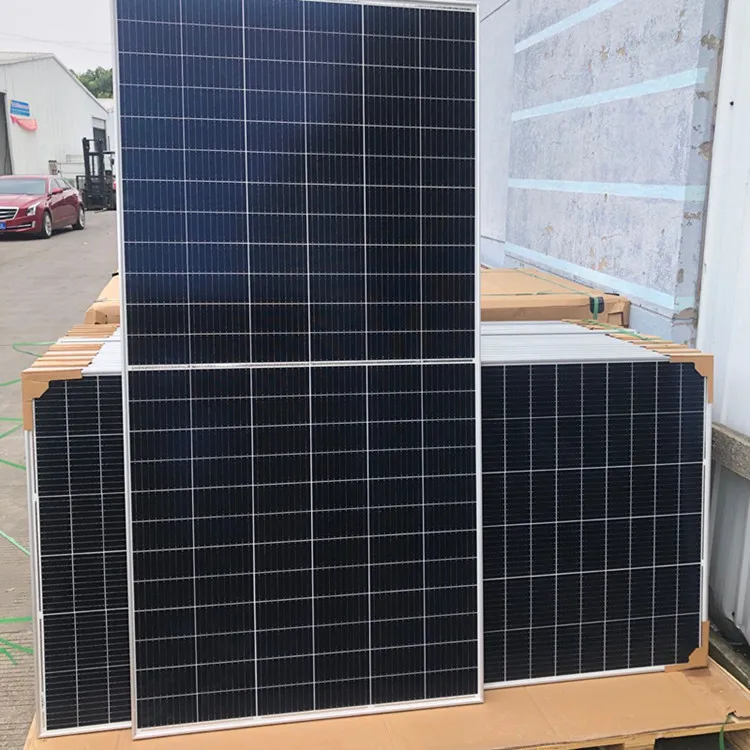
Solar farms represent significant capital investments where every percentage point of efficiency translates directly into revenue generation and return on investment. The choice of photovoltaic modules fundamentally determines the operational performance, land utilization efficiency, and long-term profitability of utility-scale solar installations. Understanding how top-grade solar panels improve the efficiency of solar farms requires examining the cascade of technical advantages these premium modules deliver across energy conversion, system design, operational reliability, and total cost of ownership. For project developers, asset owners, and energy producers, the selection between standard-grade and top-grade solar panels represents a strategic decision that shapes facility performance for decades.

The efficiency improvements delivered by top-grade solar panels extend far beyond the nameplate wattage specifications. These advanced photovoltaic modules incorporate sophisticated cell architectures, optimized material selection, and precision manufacturing processes that collectively enhance energy yield under real-world operating conditions. From superior low-light performance to reduced temperature coefficients, from enhanced bifacial gain to improved spectral response, premium solar panels address the complex performance variables that determine actual energy production in commercial solar farm environments. The cumulative impact of these technological refinements manifests in higher capacity factors, reduced levelized cost of energy, and accelerated project payback periods that justify the initial investment premium.
Enhanced Energy Conversion Through Advanced Cell Technology
Superior Photon Capture and Electron Transport Mechanisms
Top-grade solar panels utilize advanced monocrystalline cell technologies such as PERC, TOPCon, or heterojunction architectures that fundamentally improve photon-to-electron conversion efficiency. These sophisticated cell designs incorporate passivation layers that reduce recombination losses, allowing more photogenerated carriers to contribute to electrical current. In solar farm applications where millions of photons strike the module surface hourly, even marginal improvements in carrier collection efficiency translate into substantial energy gains across thousands of panels. The crystalline structure quality in premium cells ensures uniform electrical properties across the entire wafer, minimizing internal resistance losses that degrade performance in standard modules.
The electron transport pathways in top-grade solar panels benefit from optimized doping profiles and refined metallization patterns that reduce series resistance and improve fill factor. Advanced finger geometries minimize shading losses while maximizing current collection efficiency from the cell surface. These design refinements become particularly significant in large-scale solar farms where interconnection losses and resistive heating can substantially impact system-level performance. The superior electrical characteristics of premium cells maintain higher voltage outputs under varying irradiance conditions, improving inverter efficiency and reducing conversion losses throughout the power conditioning chain.
Optimized Spectral Response Across Operating Conditions
Premium photovoltaic modules demonstrate broader and more uniform spectral response characteristics, efficiently converting a wider range of the solar spectrum into electricity. Top-grade solar panels incorporate anti-reflective coatings and textured surfaces engineered to capture photons across ultraviolet, visible, and near-infrared wavelengths with minimal reflection losses. This enhanced spectral sensitivity proves particularly valuable in solar farm installations where atmospheric conditions, seasonal variations, and time-of-day factors continuously alter the spectral composition of incident sunlight. The ability to maintain high conversion efficiency across diverse spectral conditions directly increases annual energy yield compared to standard modules with narrower spectral response profiles.
The wavelength-dependent performance advantages of top-grade solar panels become especially apparent during morning and evening hours when the solar spectrum shifts toward longer wavelengths due to atmospheric path length. While conventional panels experience significant efficiency degradation under these conditions, premium modules maintain productive energy generation during extended portions of the day. For solar farms operating across multiple time zones or in regions with extended daylight periods, this extended productive window substantially increases daily energy capture. The cumulative effect across an entire year results in capacity factors several percentage points higher than comparable installations using standard-grade modules.
Thermal Performance Optimization and Temperature Coefficient Advantages
Reduced Power Degradation Under Elevated Operating Temperatures
Solar farm installations frequently operate at elevated module temperatures exceeding 60°C under high irradiance conditions, making temperature coefficient performance a critical efficiency determinant. Top-grade solar panels feature superior temperature coefficients, typically ranging from -0.26% to -0.34% per degree Celsius compared to -0.40% or higher for standard modules. This seemingly modest difference compounds dramatically across the 25-40°C temperature rise above standard test conditions common in field installations. A solar farm utilizing premium panels with a -0.30% temperature coefficient will generate approximately 3-4% more annual energy than an identical facility using modules with -0.42% coefficients, purely from thermal performance advantages.
The materials engineering and cell design innovations in top-grade solar panels contribute directly to these favorable thermal characteristics. Advanced passivation materials maintain their electrical properties across wider temperature ranges, while optimized carrier concentration profiles reduce temperature-dependent recombination mechanisms. For utility-scale installations in warm climates where module temperatures routinely exceed 70°C during peak production hours, the cumulative energy yield advantage from superior temperature coefficients can represent millions of kilowatt-hours annually. This thermal resilience ensures that top-grade solar panels maintain productivity during the most valuable high-irradiance periods when standard modules experience maximum thermal derating.
Improved Heat Dissipation and Thermal Management
Beyond intrinsic temperature coefficients, premium solar panels incorporate design features that enhance thermal management in solar farm installations. Advanced backsheet materials and frame designs facilitate convective cooling, reducing steady-state operating temperatures by several degrees compared to standard constructions. The frameless or reduced-frame designs increasingly common in top-grade solar panels promote airflow across both module surfaces, particularly important for bifacial installations where rear-surface temperature management directly impacts energy yield. Lower operating temperatures not only increase instantaneous power output but also slow degradation mechanisms, preserving long-term performance and extending productive service life.
The thermal cycling resilience of top-grade solar panels provides additional efficiency advantages in solar farm applications subject to diurnal and seasonal temperature variations. Premium modules undergo rigorous thermal cycling certification testing far exceeding IEC standards, ensuring that solder joints, interconnects, and lamination adhesion maintain integrity through thousands of thermal stress cycles. This structural stability prevents the formation of micro-cracks and delamination that progressively degrade electrical performance in standard modules. Solar farms utilizing thermally resilient premium panels maintain higher efficiency throughout their operational lifespan, avoiding the accelerated degradation that compromises energy production in facilities using lower-quality components.
Land Utilization Efficiency and System-Level Power Density Gains
Higher Wattage Ratings and Reduced Array Footprint Requirements
Top-grade solar panels deliver substantially higher power output per unit area, a critical advantage for solar farms where land acquisition costs represent significant project expenses. Modern premium modules with power ratings exceeding 600-700 watts occupy similar physical dimensions to previous-generation 400-watt standard panels, effectively increasing power density by 50-75%. This dramatic improvement allows solar farm developers to install greater generating capacity within fixed land parcels or alternatively achieve target capacity using significantly reduced acreage. The land efficiency advantage becomes particularly valuable in regions where suitable solar farm sites face geographic, regulatory, or economic constraints that limit available development area.
The reduced module count required to achieve target capacity with top-grade solar panels creates cascading system-level efficiency improvements throughout the solar farm infrastructure. Fewer modules translate directly into reduced racking and mounting hardware, simplified electrical architecture with fewer combiner boxes and string connections, and lower installation labor requirements. The consolidated array footprint reduces resistive losses in DC cabling while simplifying balance-of-system design and reducing potential failure points. These system-level efficiencies compound the inherent module-level performance advantages, creating total facility efficiency improvements substantially greater than nameplate power ratings might suggest.
Optimized String Configurations and Inverter Loading
The higher voltage and current characteristics of top-grade solar panels enable more efficient string configurations that optimize inverter utilization in solar farm installations. Premium modules with elevated power ratings allow shorter string lengths to achieve target DC voltage levels, reducing wiring complexity and resistive losses within array fields. The ability to configure strings with fewer modules while maintaining optimal inverter input parameters simplifies troubleshooting, reduces installation time, and improves system reliability. Solar farms utilizing high-power premium panels can achieve better impedance matching between PV arrays and power conditioning equipment, maximizing conversion efficiency throughout the generation and distribution chain.
The superior performance consistency across top-grade solar panels minimizes mismatch losses that degrade string-level efficiency in arrays containing modules with varying electrical characteristics. Premium manufacturing processes ensure tight power tolerance specifications, typically ±3% or better compared to ±5% for standard modules. This electrical uniformity becomes increasingly important in large solar farm installations where string configurations may contain dozens of series-connected modules. Reduced mismatch losses preserve the current-limiting advantages of the weakest module in each string, effectively improving the productive utilization of every panel within the array. The cumulative efficiency gain from reduced mismatch can represent 1-2% of total system output in large installations.
Bifacial Architecture and Albedo-Enhanced Energy Capture
Rear-Surface Energy Generation and Dual-Sided Irradiance Utilization
Top-grade solar panels increasingly incorporate bifacial cell architectures that capture reflected irradiance from ground surfaces and surrounding structures, adding 5-30% additional energy yield depending on installation configuration and albedo conditions. This dual-sided generation capability transforms solar farms into more efficient energy harvesters by utilizing photons that would otherwise be wasted in monofacial installations. The rear-surface power generation from bifacial top-grade solar panels proves particularly valuable in installations with reflective ground cover such as white aggregate, concrete, or naturally high-albedo soils. Solar farms designed specifically to maximize bifacial gain through optimized row spacing and reflective ground treatments can achieve energy density improvements approaching 25% compared to equivalent monofacial installations.
The bifacial energy capture mechanisms in premium solar panels function most effectively when combined with elevated mounting configurations that allow reflected light to reach rear cell surfaces unobstructed. Single-axis tracking systems in utility-scale solar farms provide ideal geometric conditions for bifacial gain, as the continuous panel orientation adjustments maximize both direct front-surface irradiance and reflected rear-surface illumination throughout the day. The incremental energy from bifacial capture concentrates during morning and afternoon hours when ground-reflected light reaches rear surfaces at favorable angles, effectively extending the peak production window. This temporal distribution of bifacial energy gain provides valuable generation during periods of high electricity demand, increasing the economic value of solar farm output beyond simple kilowatt-hour totals.
Reduced Shading Sensitivity and Improved Partial Shading Performance
The dual-sided generation capability of bifacial top-grade solar panels provides inherent resilience against partial shading events that severely compromise monofacial module performance. When front surfaces experience shading from soiling, snow, vegetation, or structural elements, the rear-surface cells continue generating power from reflected irradiance, partially compensating for front-surface losses. This shading resilience proves particularly valuable in solar farm installations where complete shading avoidance becomes geometrically or economically impractical. The ability to maintain productive output during partial shading events increases overall capacity factors and reduces the performance impact of maintenance delays or environmental conditions beyond operational control.
Top-grade solar panels with bifacial designs typically incorporate advanced bypass diode configurations and cell interconnection schemes that minimize the performance impact of localized shading or cell-level faults. These protective architectures prevent single shaded cells from limiting entire string output, preserving energy production from unaffected portions of the module. In large solar farm arrays where complete shading elimination remains impossible despite careful design, the shading tolerance of premium bifacial modules provides measurable efficiency advantages. The combination of rear-surface generation and sophisticated bypass protection ensures that top-grade solar panels maintain higher average output across diverse operating conditions compared to conventional monofacial modules lacking these advanced protective features.
Durability Engineering and Long-Term Performance Preservation
Superior Degradation Resistance and Sustained Efficiency
Top-grade solar panels demonstrate substantially lower annual degradation rates compared to standard modules, a critical factor determining lifetime energy production in solar farm installations operating across 25-35 year service periods. Premium modules typically exhibit first-year degradation below 2% and subsequent annual degradation rates of 0.25-0.45%, compared to 0.50-0.80% for conventional panels. Over a 30-year operational period, this degradation advantage compounds into 10-15% higher cumulative energy production, directly increasing project lifetime revenue and improving investment returns. The superior long-term performance stability of top-grade solar panels justifies premium acquisition costs through extended productive life and sustained efficiency.
The degradation resistance engineered into top-grade solar panels results from advanced encapsulation materials, UV-resistant polymers, and refined metallization techniques that resist environmental stressors. Potential-induced degradation, light-induced degradation, and electrochemical corrosion mechanisms that progressively compromise standard modules have minimal impact on premium panels engineered with protective materials and design features. Solar farms utilizing degradation-resistant premium modules maintain higher capacity factors throughout their operational lifespan, avoiding the performance decline that forces premature replacement or capacity augmentation in facilities using lower-quality components. The sustained efficiency of top-grade solar panels ensures that solar farm energy production forecasts remain accurate across multi-decade operating periods.
Enhanced Mechanical Reliability and Weather Resilience
The structural engineering in top-grade solar panels incorporates reinforced frames, impact-resistant glass, and robust junction box designs that withstand harsh environmental conditions in solar farm installations. Premium modules routinely exceed certification requirements for mechanical loading, hail impact, and wind resistance, providing substantial safety margins that protect against extreme weather events and mechanical stresses. This structural resilience reduces the frequency of module failures, cracking, and weather-related damage that compromise energy production and necessitate costly replacements in solar farms using standard-grade components. The reduced failure rates and extended service life of structurally superior premium panels lower lifetime maintenance costs while preserving energy production efficiency.
The weather resilience of top-grade solar panels proves particularly valuable in solar farm installations exposed to extreme temperature variations, high humidity, salt-laden coastal environments, or regions prone to severe weather. Premium modules undergo accelerated environmental testing far exceeding standard certification protocols, ensuring reliable operation across temperature ranges from -40°C to +85°C and humidity conditions approaching 100%. The corrosion-resistant materials and sealed construction prevent moisture ingress and electrochemical degradation that progressively reduce efficiency in standard panels. Solar farms in challenging environmental conditions achieve substantially higher long-term energy production using weather-resilient premium modules engineered to maintain performance across diverse and demanding operating environments.
System Integration Advantages and Operational Flexibility
Enhanced Monitoring Capabilities and Fault Detection
Top-grade solar panels frequently incorporate advanced monitoring features such as integrated optimizers, embedded sensors, or smart junction boxes that provide module-level performance visibility. These monitoring capabilities enable solar farm operators to identify underperforming panels, detect developing faults, and optimize maintenance scheduling with unprecedented precision. The granular performance data from smart premium modules supports predictive maintenance strategies that minimize downtime and preserve system efficiency by addressing degradation issues before they propagate to string or array level impacts. The operational intelligence provided by advanced monitoring features justifies the incremental cost of smart top-grade solar panels through reduced operational expenses and maintained energy production.
The system integration flexibility of top-grade solar panels accommodates advanced power electronics and control strategies that optimize solar farm performance. Premium modules with wide operating voltage ranges and stable electrical characteristics function effectively with sophisticated maximum power point tracking algorithms, energy storage integration, and grid-support functionalities. This compatibility with advanced system architectures enables solar farm operators to participate in ancillary services markets, provide frequency regulation, and implement sophisticated energy management strategies that increase project revenue beyond simple energy sales. The technical sophistication of top-grade solar panels positions utility-scale installations to capitalize on evolving grid requirements and electricity market opportunities.
Simplified Installation Processes and Reduced Labor Requirements
The higher power ratings and optimized physical characteristics of top-grade solar panels reduce installation complexity and labor requirements in solar farm construction. Fewer modules to handle, mount, and interconnect translate directly into accelerated construction schedules and reduced labor costs, partially offsetting the premium acquisition expense. The reduced module count simplifies quality control procedures, minimizes handling damage risk, and accelerates commissioning processes. Solar farm developers utilizing high-power premium panels can complete installations with smaller construction crews in shorter timeframes, reducing financing costs and accelerating revenue generation commencement. The installation efficiency advantages of top-grade solar panels become particularly significant in large utility-scale projects where labor costs represent substantial portions of total capital expenditure.
The standardized dimensions and connection interfaces common among top-grade solar panels simplify procurement, logistics, and spare parts management for solar farm operators. Premium manufacturers typically offer extensive product warranties and readily available replacement modules, ensuring that solar farms maintain optimal performance throughout their operational lifespan. The supply chain reliability associated with established premium manufacturers reduces inventory carrying costs and simplifies long-term asset management. Solar farm operators benefit from the comprehensive technical support, performance guarantees, and product availability that accompany top-grade solar panels, advantages that prove increasingly valuable as installations age and require ongoing maintenance and occasional component replacement.
FAQ
What specific efficiency improvements can solar farms expect when upgrading to top-grade solar panels?
Solar farms upgrading to top-grade solar panels typically experience 3-8% increases in annual energy yield compared to standard modules, resulting from combined advantages in conversion efficiency, temperature performance, bifacial gain, and reduced degradation. The specific improvement magnitude depends on site conditions, system design, and the baseline module specifications being replaced. Premium panels with superior temperature coefficients provide particularly significant gains in warm climates, while bifacial designs deliver maximum advantages in installations with reflective ground surfaces and optimized row spacing. Beyond immediate efficiency improvements, top-grade solar panels demonstrate substantially lower long-term degradation rates, preserving performance across multi-decade operational periods and increasing lifetime energy production by 10-15% compared to facilities using standard-grade components.
How do bifacial capabilities in premium solar panels contribute to solar farm efficiency improvements?
Bifacial top-grade solar panels capture reflected irradiance from ground surfaces and surrounding structures, generating 5-30% additional energy depending on installation configuration, ground albedo, mounting height, and row spacing. This dual-sided generation capability effectively increases energy density without requiring additional land area, improving the economic efficiency of solar farm installations. The bifacial energy gain proves most significant in installations with reflective ground treatments, elevated mounting structures, and single-axis tracking systems that optimize rear-surface irradiance exposure throughout the day. Beyond direct energy capture advantages, bifacial designs provide inherent resilience against partial shading and soiling, maintaining productive output during conditions that severely compromise monofacial module performance. The cumulative efficiency advantage from bifacial architecture represents one of the most significant technological advancements differentiating premium from standard solar panels in utility-scale applications.
Do the higher upfront costs of top-grade solar panels justify their efficiency advantages in solar farm applications?
The economic justification for top-grade solar panels in solar farm applications depends on project-specific factors including electricity prices, financing costs, land availability, and operational timelines, but analysis typically demonstrates favorable returns. The 15-25% premium cost for high-efficiency modules generates 3-8% immediate efficiency improvements plus 10-15% additional lifetime energy from reduced degradation rates, substantially lowering levelized cost of energy across project lifespans. Additional economic benefits include reduced land requirements, simplified balance-of-system costs, accelerated installation schedules, and lower maintenance expenses that compound the direct energy production advantages. Solar farms in land-constrained locations, high-electricity-price markets, or regions with favorable solar resource characteristics achieve particularly attractive returns from premium module investments. Comprehensive financial modeling incorporating all system-level cost savings and long-term performance advantages typically demonstrates payback periods of 2-4 years for the incremental premium investment, with substantial positive net present value across full project lifetimes.
What role does temperature coefficient performance play in determining solar farm efficiency with premium panels?
Temperature coefficient performance represents one of the most significant efficiency differentiators between top-grade and standard solar panels in utility-scale applications where modules frequently operate 25-40°C above standard test conditions. Premium panels with superior temperature coefficients around -0.30% per degree Celsius maintain substantially higher output during elevated temperature periods compared to standard modules with -0.42% coefficients. This seemingly modest difference compounds into 3-4% annual energy production advantages in warm climate installations where modules routinely exceed 60-70°C during peak production hours. The thermal performance advantage proves particularly valuable because it preserves efficiency during high-irradiance periods that represent the most productive and economically valuable generation opportunities. Solar farms in desert, tropical, or high-ambient-temperature regions achieve maximum return on investment from top-grade solar panels specifically because the superior temperature coefficients maintain productivity under conditions that severely derate standard module output.
Table of Contents
- Enhanced Energy Conversion Through Advanced Cell Technology
- Thermal Performance Optimization and Temperature Coefficient Advantages
- Land Utilization Efficiency and System-Level Power Density Gains
- Bifacial Architecture and Albedo-Enhanced Energy Capture
- Durability Engineering and Long-Term Performance Preservation
- System Integration Advantages and Operational Flexibility
-
FAQ
- What specific efficiency improvements can solar farms expect when upgrading to top-grade solar panels?
- How do bifacial capabilities in premium solar panels contribute to solar farm efficiency improvements?
- Do the higher upfront costs of top-grade solar panels justify their efficiency advantages in solar farm applications?
- What role does temperature coefficient performance play in determining solar farm efficiency with premium panels?
