
 EN
EN

Solar street lighting systems have revolutionized outdoor illumination by offering sustainable, grid-independent solutions for municipalities, commercial properties, and remote infrastructure. At the heart of every efficient solar street light lies a charge controller that manages energy flow between the solar panel, battery, and LED fixture. Among the available technologies, the PWM solar controller stands out as a pragmatic choice for installations where cost efficiency, reliability, and simplicity are paramount. Understanding why this technology remains relevant in today's solar street lighting market requires examining its operational advantages, economic benefits, and suitability for specific application scenarios where performance requirements align with budget constraints.
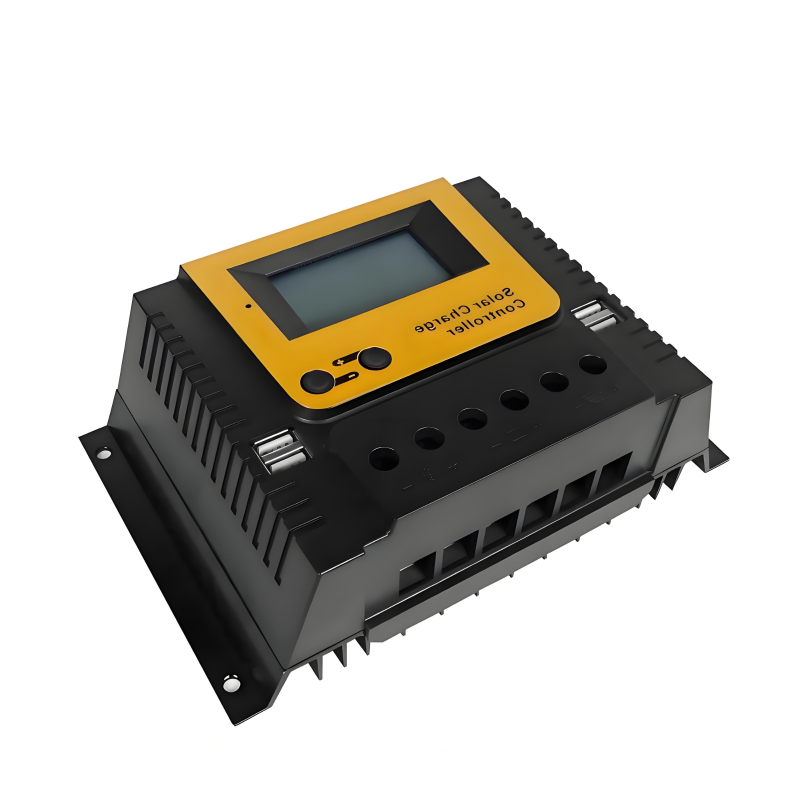
The decision to integrate a PWM solar controller into solar street light infrastructure extends beyond simple component selection. It represents a strategic balance between initial capital expenditure, long-term maintenance considerations, and the specific energy demands of LED street lighting applications. While alternative technologies like MPPT controllers offer certain advantages in specific scenarios, the PWM solar controller delivers compelling value propositions for projects where voltage compatibility, system simplicity, and predictable performance meet real-world municipal budgets. This article explores the technical, economic, and practical reasons why PWM solar controllers continue to dominate cost-conscious solar street lighting deployments worldwide.
Fundamental Economic Advantages of PWM Technology in Street Lighting
Lower Initial Investment Without Performance Compromise
The most immediate advantage of selecting a PWM solar controller for solar street light projects lies in its significantly reduced procurement cost compared to MPPT alternatives. This price differential typically ranges from thirty to fifty percent depending on current capacity and feature set, creating substantial savings across large-scale municipal deployments. For projects involving dozens or hundreds of street lights, these per-unit savings compound into meaningful budget optimization without sacrificing the core functionality required for reliable nighttime illumination. The PWM solar controller achieves this cost efficiency through simpler circuit topology and fewer power conversion stages, translating manufacturing simplicity directly into customer value.
This economic advantage becomes particularly pronounced in projects with tight budget constraints or phased rollout schedules where capital preservation enables broader coverage. Municipal lighting departments often face the challenge of maximizing illuminated road kilometers within fixed annual budgets, making component cost optimization a critical planning factor. The PWM solar controller enables project managers to allocate more resources toward higher-capacity batteries, more efficient LED fixtures, or simply greater deployment density. This practical trade-off acknowledges that in properly designed systems with voltage-matched components, the theoretical efficiency gains of more complex controllers may not justify their premium pricing for basic street lighting applications.
Reduced Complexity Translates to Lower Maintenance Costs
Beyond initial purchase price, the PWM solar controller offers significant lifecycle cost advantages through its inherently simpler design and operation. With fewer electronic components and less complex switching circuitry, these controllers demonstrate excellent long-term reliability with minimal field service requirements. Municipal maintenance teams particularly value this simplicity, as it reduces the specialized training needed for troubleshooting and the inventory of spare components required for emergency repairs. The straightforward operation of the PWM solar controller means that diagnostic procedures can be performed with basic multimeters rather than specialized test equipment, reducing both equipment costs and technician skill requirements.
This maintenance advantage extends to the entire system lifecycle, where component longevity directly impacts total cost of ownership. The robust, time-tested design of quality PWM solar controllers contributes to operational lifespans exceeding ten years in properly protected installations. This durability reduces the frequency of controller replacements and associated labor costs for accessing pole-mounted equipment. For remote rural installations or extensive street lighting networks, minimizing field service calls represents substantial cumulative savings. The PWM solar controller thus delivers value not only through its purchase price but through reduced operational burden across years of continuous service.
Compatibility With Standard System Voltages Eliminates Cost Escalation
The voltage characteristics of PWM solar controllers align perfectly with the standard 12V and 24V architectures that dominate solar street lighting systems worldwide. This compatibility eliminates the need for voltage conversion equipment or specialized component matching that can inflate system costs. When solar panels, batteries, and LED drivers all operate at compatible voltages, the PWM solar controller facilitates straightforward system integration without additional power conditioning stages. This architectural simplicity not only reduces bill-of-materials costs but also improves overall system reliability by eliminating potential failure points associated with voltage transformation.
This voltage compatibility becomes especially valuable in retrofit scenarios where existing street light infrastructure is being converted to solar operation. Many municipalities already have established supply chains and maintenance procedures centered around 12V or 24V DC systems from previous installations. Adopting PWM solar controllers allows these organizations to leverage existing technical knowledge, spare parts inventories, and vendor relationships rather than investing in entirely new ecosystem infrastructure. This continuity reduces training costs, procurement complexity, and the risk of specification errors during large-scale deployments. The PWM solar controller thus serves as an enabling technology that bridges legacy knowledge with modern solar capabilities.
Technical Performance Characteristics Suited to Street Lighting Requirements
Efficient Energy Transfer in Voltage-Matched Systems
The operational principle of the PWM solar controller involves rapid switching to maintain battery voltage while drawing current from solar panels, creating an effective charging profile when system voltages are properly matched. In typical solar street light applications using 36-cell or 72-cell solar panels paired with 12V or 24V battery banks respectively, this voltage compatibility ensures that the PWM solar controller operates near its optimal efficiency range. The controller effectively pulls down the panel voltage to match battery requirements, and when this voltage differential is minimal, conversion losses remain acceptably low for the power levels typical in street lighting applications.
This performance characteristic makes the PWM solar controller particularly well-suited to the moderate power demands of LED street lighting, which typically range from twenty to sixty watts depending on road classification and lighting standards. At these power levels, the absolute efficiency differences between PWM and MPPT technologies translate to relatively small energy quantities that may not justify the cost premium of more sophisticated controllers. The PWM solar controller delivers adequate charging performance to maintain battery state of charge across typical daily cycles, ensuring reliable nighttime operation while keeping system costs grounded in practical economics. This balance between performance adequacy and cost efficiency represents the core value proposition for municipal street lighting applications.
Reliable Operation Across Varied Environmental Conditions
The robust design of quality PWM solar controllers ensures consistent operation across the wide temperature ranges and environmental conditions encountered in outdoor street lighting installations. Unlike more complex electronic systems with higher component counts and tighter thermal management requirements, the PWM solar controller typically operates reliably from subzero winter temperatures to summer heat exceeding fifty degrees Celsius. This thermal resilience stems from the simpler circuit topology and lower power dissipation characteristics inherent to PWM switching operation, which generates less waste heat than alternative conversion methods at comparable power levels.
Environmental reliability extends beyond temperature tolerance to include resistance to humidity, dust ingress, and voltage transients common in outdoor electrical installations. Modern PWM solar controllers incorporate protective features such as sealed enclosures, conformal coating on circuit boards, and transient voltage suppression to withstand harsh installation environments. These protective measures ensure that controllers continue functioning reliably even when mounted inside street light poles where temperature cycling, condensation, and vibration from wind loading create challenging operating conditions. The proven track record of PWM solar controllers in demanding field applications provides municipal specifiers with confidence in long-term performance stability.
Simplified System Sizing and Component Selection
The predictable behavior of PWM solar controllers simplifies the system design process, allowing engineers and installers to use straightforward calculation methods for component sizing. When selecting solar panels, the primary consideration becomes ensuring that panel open-circuit voltage remains within safe limits for the battery system while providing adequate current generation capacity. This direct relationship between panel current output and battery charging current makes sizing calculations more intuitive than the complex voltage-current optimization required with alternative controller technologies. The PWM solar controller thus reduces engineering time and the risk of specification errors during project planning phases.
This design simplicity extends to field installation, where technicians can verify proper system operation using basic voltage and current measurements without sophisticated diagnostic equipment. The PWM solar controller typically provides clear visual indicators of charging status, load operation, and fault conditions, enabling rapid commissioning and troubleshooting. For municipal electrical departments or contractors handling multiple concurrent installations, this operational transparency accelerates project completion and reduces callbacks for system adjustments. The ease of working with PWM solar controllers contributes to lower installation labor costs and improved project timelines, adding to their overall economic advantage.
Strategic Application Scenarios Where PWM Controllers Excel
Budget-Constrained Municipal Street Lighting Projects
Municipal governments frequently face the challenge of upgrading aging street lighting infrastructure with limited capital budgets, making cost optimization essential for project feasibility. In these scenarios, the PWM solar controller enables broader deployment coverage by reducing per-fixture costs without compromising fundamental performance requirements. Cities can illuminate more kilometers of roadway, serve more residential neighborhoods, or accelerate project timelines by selecting components that deliver adequate performance at the lowest practical cost point. The savings realized through PWM solar controller selection often make the difference between partial and complete project implementation within annual budget allocations.
These budget-driven decisions carry particular weight in developing regions or smaller municipalities where fiscal constraints limit infrastructure investment capacity. The PWM solar controller allows these communities to access solar street lighting benefits without requiring premium budgets or international financing arrangements. Local procurement of standard PWM solar controllers also supports regional economic development and simplifies long-term parts availability. This accessibility dimension makes the PWM solar controller not just a technical choice but an enabling technology that democratizes access to sustainable lighting infrastructure across diverse economic contexts.
Residential and Secondary Road Applications
The moderate lighting requirements of residential streets, pedestrian pathways, and secondary roads align perfectly with the capabilities of PWM solar controller-based systems. These applications typically require lower illumination levels than primary arterial roads, translating to smaller solar panels and battery capacities where the efficiency advantages of more complex controllers provide diminishing returns. The PWM solar controller delivers entirely adequate performance for thirty to forty-watt LED fixtures that provide sufficient visibility for safe pedestrian and vehicle movement in low-speed environments. Choosing appropriately scaled technology for these applications avoids over-specification while maintaining reliable operation.
In residential contexts, the simplicity and reliability of PWM solar controllers offer additional benefits beyond pure economics. Homeowners associations, property developers, and community organizations appreciate systems that require minimal technical maintenance and provide predictable long-term operation. The PWM solar controller supports this preference through its straightforward operation and reduced likelihood of complex failure modes requiring specialized service. For pathway lighting in parks, campus environments, or private developments, this combination of adequate performance and minimal maintenance burden makes PWM-based systems the logical choice for responsible facility managers.
Retrofit and Replacement Projects With Existing Infrastructure
When upgrading existing conventional street lights to solar operation, the PWM solar controller offers compatibility advantages that simplify conversion projects and preserve previous infrastructure investments. Many existing street light poles, mounting hardware, and electrical enclosures were designed around 12V or 24V DC systems, making PWM solar controllers a natural fit for retrofit applications. This compatibility allows project managers to reuse substantial portions of existing infrastructure, reducing demolition waste, material costs, and installation complexity. The PWM solar controller thus serves as a bridge technology that extends the useful life of previous investments while adding solar capabilities.
Retrofit scenarios also benefit from the ability to standardize on PWM solar controller technology across mixed vintages of equipment, simplifying maintenance procedures and spare parts management. Municipal maintenance departments can train staff on a single controller platform and maintain unified inventory systems rather than managing multiple technologies with different diagnostic procedures and replacement parts. This operational standardization delivers cumulative efficiency gains across large lighting networks where consistency reduces cognitive load on field personnel and minimizes the risk of installation errors. The PWM solar controller supports this standardization strategy through its widespread availability and established position in solar street lighting supply chains.
Practical Implementation Considerations for Optimal Performance
System Design Best Practices for PWM Controllers
Achieving optimal performance from PWM solar controllers requires attention to fundamental system design principles that ensure voltage compatibility and adequate current capacity. The solar panel selection process should prioritize current output capability while maintaining appropriate voltage characteristics for the battery system. For 12V systems, panels with 18V nominal voltage provide sufficient overhead for effective charging, while 24V systems benefit from 36V nominal panels. The PWM solar controller then efficiently transfers the available panel current to battery charging, making current capacity the primary sizing parameter. Properly matched systems enable the controller to operate within its design envelope, delivering reliable performance across seasonal variations in solar availability.
Battery selection represents another critical design consideration that influences overall system performance and longevity. The PWM solar controller works optimally with battery chemistries and capacities that match the charging current capabilities of the solar array and the discharge demands of the LED load. Oversized batteries relative to charging capacity result in chronic undercharging and reduced lifespan, while undersized batteries experience excessive depth-of-discharge cycling that accelerates degradation. Quality PWM solar controllers incorporate multi-stage charging algorithms that optimize battery health through proper bulk, absorption, and float charging phases, but these algorithms can only function effectively when system components are appropriately proportioned to each other.
Installation and Commissioning Procedures
Proper installation of PWM solar controllers follows straightforward procedures that ensure safe operation and optimal system performance. The controller should be mounted in a location protected from direct weather exposure while maintaining adequate ventilation for heat dissipation, typically inside the street light pole or in a weatherproof enclosure near the battery compartment. All electrical connections must be properly sized for the current loads involved, with particular attention to cable gauge selection for the solar panel input to minimize voltage drop. The PWM solar controller typically includes clearly labeled terminals for solar, battery, and load connections, reducing the risk of wiring errors during installation.
Commissioning procedures verify that the system operates as designed before final acceptance. Installers should confirm correct voltage readings at the battery terminals, proper operation of the load output during nighttime or simulated darkness, and appropriate solar charging behavior during daylight hours. Many PWM solar controllers include built-in diagnostic features such as LED status indicators or LCD displays that simplify this verification process. Testing should include observation of the controller's low-voltage disconnect function to ensure the battery receives proper protection against over-discharge. These systematic commissioning steps prevent field failures and ensure that solar street lights deliver expected performance from initial energization forward.
Maintenance and Long-Term Operation
The minimal maintenance requirements of PWM solar controllers contribute significantly to their total cost of ownership advantages in street lighting applications. Routine maintenance primarily involves visual inspection of connections for corrosion or looseness, verification of proper LED status indications, and periodic voltage measurements to confirm normal operation. The PWM solar controller itself typically requires no consumable replacements or calibration adjustments, maintaining consistent operation throughout its service life. This maintenance simplicity allows municipal crews to service multiple street lights efficiently during routine inspection rounds without specialized tools or extended troubleshooting procedures.
Long-term reliability depends partly on protecting the PWM solar controller from environmental extremes and electrical transients. Quality installations include transient voltage surge protection on both solar and battery circuits, preventing damage from lightning-induced voltage spikes or inductive switching transients. Temperature management through proper ventilation and shading from direct sun exposure extends controller lifespan by reducing thermal stress on electronic components. When these basic protective measures accompany quality PWM solar controllers, systems routinely achieve operational lifespans exceeding a decade with minimal intervention, validating the technology choice for cost-conscious street lighting projects.
FAQ
What is the typical efficiency of a PWM solar controller in street lighting applications?
PWM solar controllers typically operate at approximately seventy-five to eighty percent efficiency in properly voltage-matched street lighting systems. This efficiency reflects the controller's method of pulling panel voltage down to battery level through rapid switching, which becomes most effective when the voltage differential between solar panels and batteries remains modest. In standard configurations using 36-cell panels with 12V batteries or 72-cell panels with 24V batteries, this efficiency level proves entirely adequate for maintaining battery charge across typical daily cycles. The absolute energy losses at the power levels used in street lighting translate to small quantities that do not materially impact system performance when panels are sized with appropriate margin.
How does a PWM solar controller protect batteries in solar street light systems?
Quality PWM solar controllers incorporate multiple battery protection features including overcharge prevention through voltage-regulated charging termination, over-discharge protection via low-voltage disconnect of the load, and temperature compensation that adjusts charging voltages based on ambient conditions. These protective functions extend battery lifespan by preventing the extreme operating conditions that accelerate degradation. The controller monitors battery voltage continuously and transitions between charging stages automatically, implementing bulk charging when batteries are depleted, absorption charging as they approach full capacity, and float maintenance charging to prevent self-discharge. The low-voltage disconnect feature ensures that LED loads shut off before batteries reach damaging discharge levels, preserving capacity for subsequent charge cycles.
Can PWM solar controllers work effectively in regions with variable weather conditions?
PWM solar controllers function reliably across diverse climate conditions provided the overall system design includes adequate solar panel capacity and battery storage to accommodate local weather patterns. In regions with frequent cloudy periods or seasonal variations in solar availability, system sizing must account for extended low-production periods by incorporating larger battery banks and oversized solar arrays. The PWM solar controller continues to charge batteries whenever sufficient sunlight is available, accumulating energy during productive periods to sustain operation through less favorable conditions. The controller's simplicity actually provides advantages in variable weather environments because its straightforward operation remains consistent regardless of charging current levels, unlike more complex systems that may exhibit performance variations at low power levels.
What size solar street light systems are best suited for PWM solar controllers?
PWM solar controllers deliver optimal value in small to medium-scale solar street lighting systems typically ranging from twenty to sixty watts of LED load capacity. These power levels correspond to the majority of residential street lighting, pathway illumination, and secondary road applications where moderate lighting levels suffice for safe visibility. At these scales, the cost advantages of PWM solar controllers remain significant while their efficiency characteristics prove entirely adequate for reliable operation. Systems exceeding one hundred watts may benefit from alternative controller technologies, but for the substantial majority of municipal street lighting applications, PWM solar controllers provide the most cost-effective solution that balances initial investment, operational reliability, and maintenance simplicity across extended service lifetimes.
Table of Contents
- Fundamental Economic Advantages of PWM Technology in Street Lighting
- Technical Performance Characteristics Suited to Street Lighting Requirements
- Strategic Application Scenarios Where PWM Controllers Excel
- Practical Implementation Considerations for Optimal Performance
-
FAQ
- What is the typical efficiency of a PWM solar controller in street lighting applications?
- How does a PWM solar controller protect batteries in solar street light systems?
- Can PWM solar controllers work effectively in regions with variable weather conditions?
- What size solar street light systems are best suited for PWM solar controllers?
