
 EN
EN
Selecting the right PWM solar controller for a bulk industrial order is a decision that directly affects system performance, long-term reliability, and total project cost. When procurement teams source a PWM solar controller at scale, small specification errors multiply across hundreds or thousands of units, turning minor oversights into significant operational problems. Understanding what separates a high-quality PWM solar controller from an average one is the foundation of smart industrial purchasing.
For buyers placing large industrial orders, the PWM solar controller evaluation process must go beyond basic voltage ratings. A reliable PWM solar controller must fit the electrical profile of the battery bank, operate efficiently across a broad temperature range, and meet the certification standards required by the destination market. This guide walks through the critical selection criteria that experienced procurement professionals apply when evaluating a PWM solar controller for bulk supply contracts.
Core Technical Specifications to Evaluate
Voltage and Current Rating Compatibility
Every PWM solar controller is rated for a specific system voltage and maximum charge current. For industrial applications, the most common system voltages are 12V, 24V, and 48V. A PWM solar controller rated for 48V systems typically serves larger battery banks used in telecom towers, off-grid industrial facilities, and rural electrification projects. Before finalizing a bulk order, procurement teams must confirm that the PWM solar controller supports the exact voltage profile of the target installation. Mismatched voltage ratings render a PWM solar controller incompatible, creating costly returns and project delays.
Current rating is equally important. A PWM solar controller with a higher ampere rating can handle more solar panel input without overheating. For bulk orders serving diverse sites, sourcing a PWM solar controller with a flexible current range, such as a unit available in 10A, 20A, 30A, and 40A variants, allows procurement teams to fulfill different site requirements from a single supplier. This flexibility simplifies logistics and reduces the number of SKUs that need to be managed across a large project portfolio.
Battery Type Compatibility and Charging Algorithm
A quality PWM solar controller must support the battery chemistry used in the target application. Common battery types include sealed lead-acid, flooded lead-acid, gel, and AGM batteries. Some advanced PWM solar controller models also support lithium battery banks with appropriate BMS integration. When placing a bulk order, specifying the correct battery type setting on each PWM solar controller ensures that the charging algorithm is optimized from day one. Incorrect battery settings on a PWM solar controller can shorten battery life significantly, increasing replacement costs over the system's lifetime.
Build Quality and Environmental Durability
Thermal Management and Protection Features
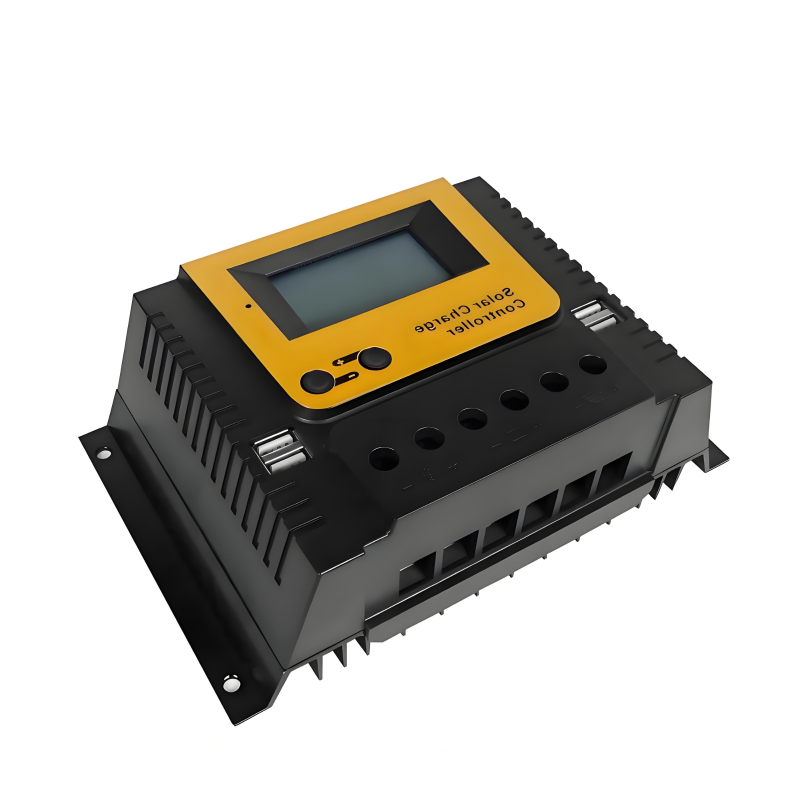
Industrial deployments expose a PWM solar controller to harsh environmental conditions including extreme heat, humidity, and dust. A well-engineered PWM solar controller incorporates an aluminum heat-dissipating enclosure, automatic temperature compensation, and thermal shutdown protection. These features prevent the PWM solar controller from overheating during peak summer loads. When reviewing product specifications for a bulk order, buyers should confirm that the PWM solar controller includes over-voltage protection, short-circuit protection, reverse polarity protection, and overload protection as standard features rather than optional upgrades.
The IP rating of a PWM solar controller enclosure also matters for outdoor and semi-exposed installations. A PWM solar controller designed for industrial use should offer at least IP32 protection or higher for installations in dusty or partially exposed environments. Reviewing the physical construction of the PWM solar controller, including terminal block quality, cable entry points, and mounting options, helps buyers assess real-world durability before committing to a large quantity order.
Display and Monitoring Capabilities
In industrial deployments, maintenance teams need to quickly read the operating status of each PWM solar controller without specialized equipment. A PWM solar controller equipped with an LCD display showing battery voltage, charge current, load status, and fault codes dramatically reduces troubleshooting time in the field. For remote installations, a PWM solar controller that supports RS485 communication or optional data logging modules enables centralized monitoring of multiple units simultaneously. When evaluating suppliers for a bulk PWM solar controller order, the availability of remote monitoring support is increasingly considered a standard requirement rather than a premium feature.
Supplier Evaluation for Bulk Industrial Orders
Certification and Compliance Standards
Before committing to a bulk PWM solar controller purchase, procurement teams must verify that the product holds relevant certifications for the destination market. CE certification is required for European markets, while other regions may require additional compliance marks. A certified PWM solar controller has been independently tested for electromagnetic compatibility, electrical safety, and performance consistency. Requesting a copy of test reports for the specific PWM solar controller model being ordered protects buyers from sourcing uncertified products that could fail customs clearance or site acceptance inspections.
Reliable suppliers of a PWM solar controller for bulk orders should provide full product documentation including datasheets, wiring diagrams, installation manuals, and warranty terms. The warranty period for a quality PWM solar controller in industrial supply chains typically ranges from one to three years. Buyers should also ask about spare parts availability and technical support channels, since field replacements of a PWM solar controller in remote installations must be handled quickly to avoid system downtime.
Minimum Order Quantity and Customization Options
When negotiating a bulk PWM solar controller order, understanding the supplier's minimum order quantity, lead times, and customization capabilities is essential. Some manufacturers offer private-label packaging or firmware customization for a PWM solar controller ordered in sufficient quantities. Custom branding on the PWM solar controller unit or packaging can support resellers and system integrators who deploy equipment under their own brand identity. Lead time for a bulk PWM solar controller shipment typically ranges from two to six weeks depending on stock levels and production scheduling, so early procurement planning is strongly advised.
FAQ
What is the difference between a PWM solar controller and an MPPT controller for industrial use?
A PWM solar controller regulates charging by reducing the pulse width of the current fed to the battery, making it a cost-effective solution for smaller systems with matched panel and battery voltages. An MPPT controller tracks the maximum power point of the solar array and is more efficient when panel voltage significantly exceeds battery voltage. For bulk industrial orders where cost efficiency is prioritized and system voltages are matched, a PWM solar controller remains a strong and widely used choice.
How many units should a buyer order to qualify for industrial pricing on a PWM solar controller?
Industrial pricing thresholds for a PWM solar controller vary by manufacturer, but most suppliers begin offering tiered discounts at order quantities of 50 units or more. Larger orders of 200 or 500 units typically unlock deeper price reductions and may include value-added services such as custom packaging or dedicated technical support. Buyers should request formal quotations at multiple quantity breakpoints to identify the most cost-effective procurement volume for their project pipeline.
Can a PWM solar controller be used in both on-grid and off-grid industrial systems?
A PWM solar controller is specifically designed for off-grid battery-based systems where it manages the charging process between solar panels and a battery bank. It is not compatible with grid-tied inverter systems that operate without battery storage. For hybrid industrial systems that combine battery backup with grid connection, the PWM solar controller manages the battery side independently while a separate grid-tie inverter handles the grid interaction. Confirming the system architecture before ordering a PWM solar controller in bulk ensures the product is correctly matched to the intended application.
